In France, a wedding is also judged by its table. For guests who have dined in the world’s finest houses, the wedding dinner must live up to their memories. Having a celebrated chef sign your menu is offering far more than a meal: a narrative, a season, an emotion to be savored.
Why a master chef
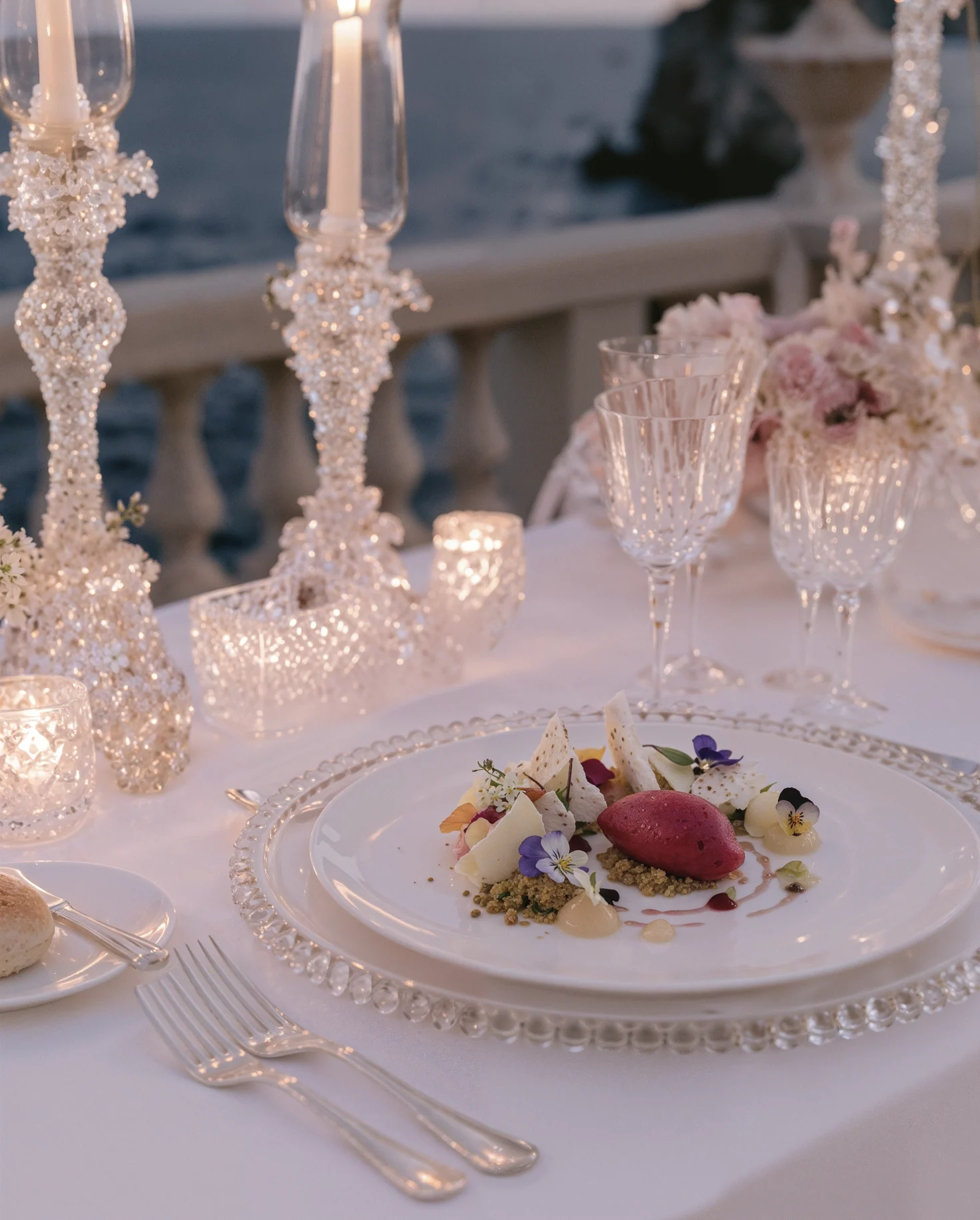
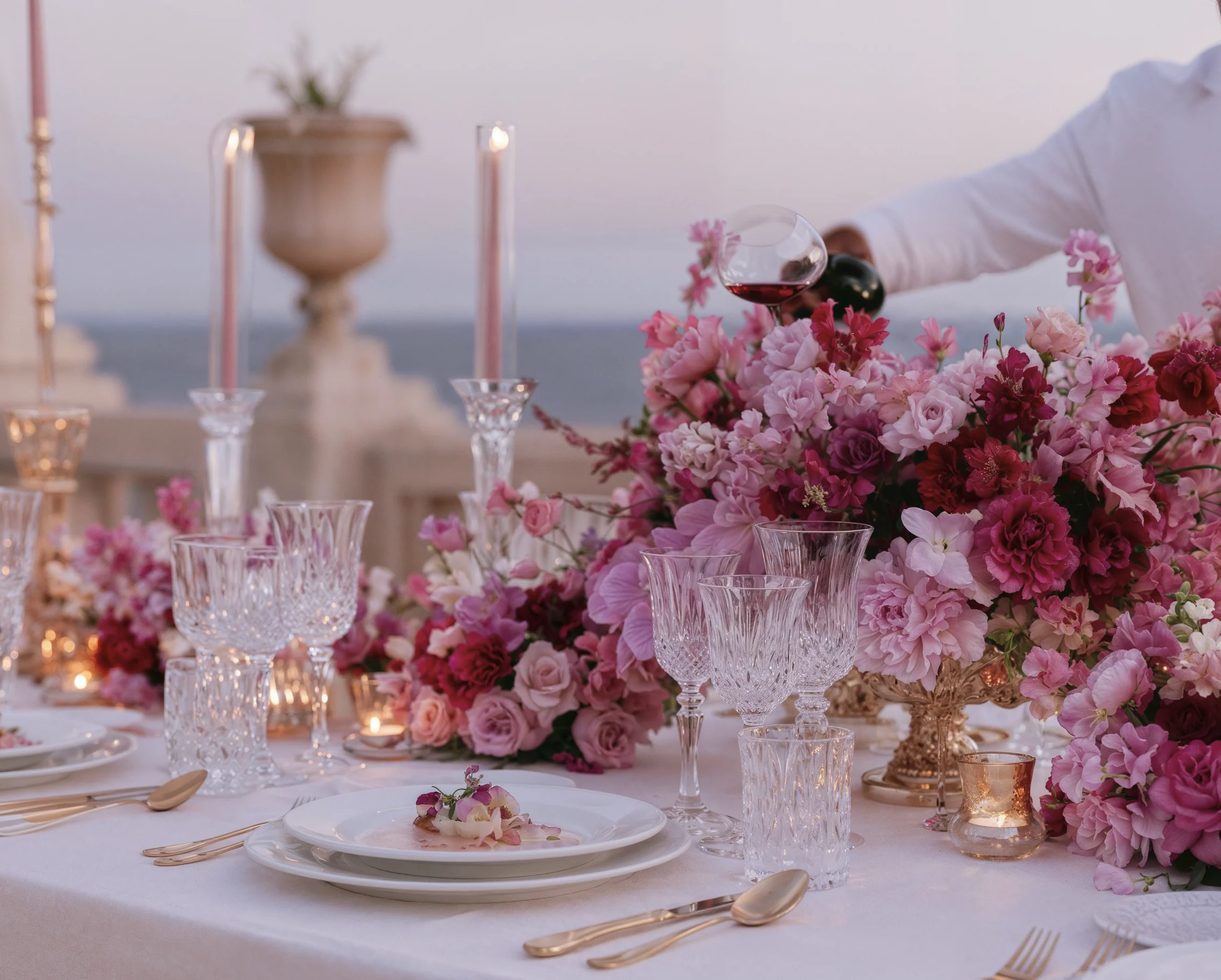
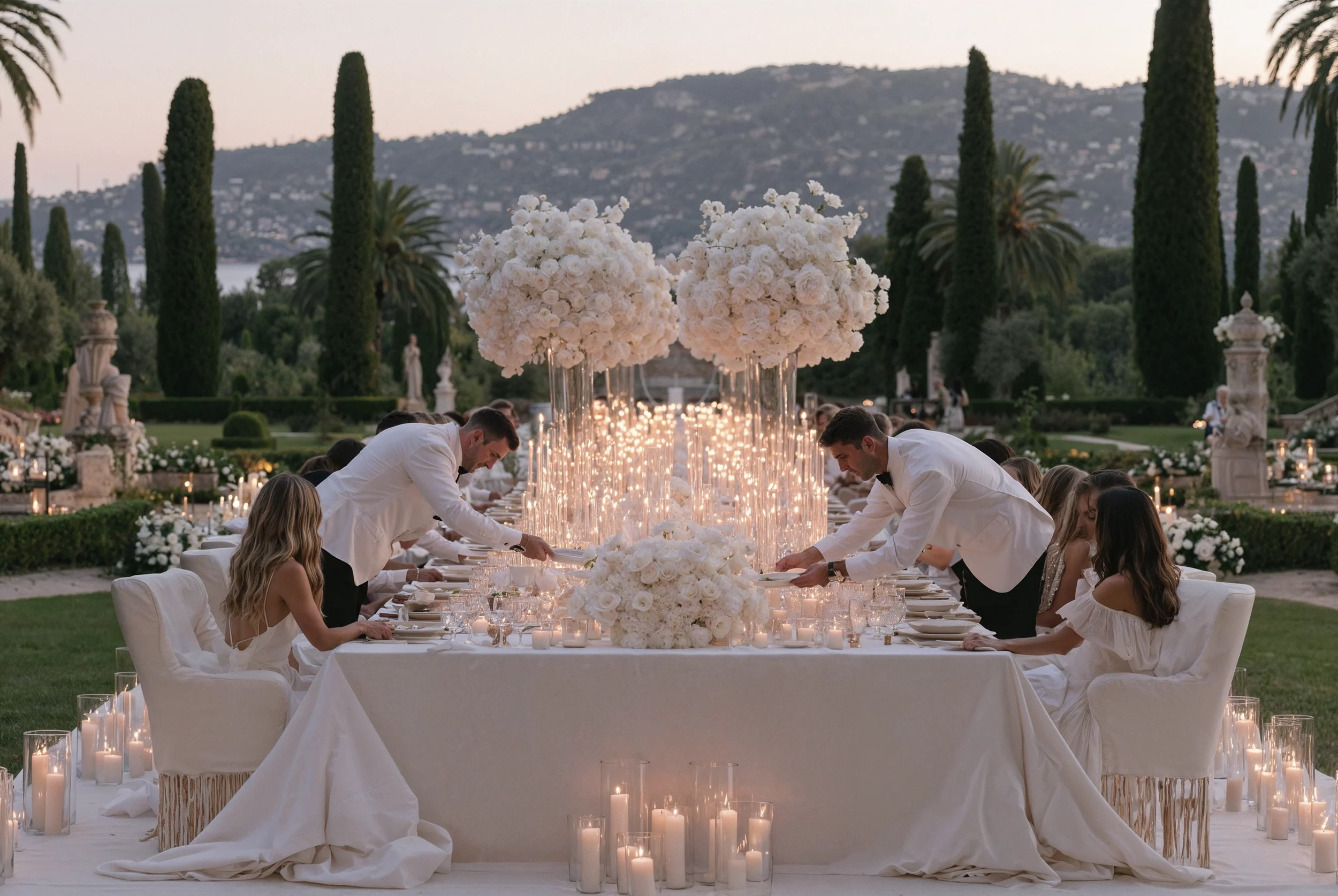
Gastronomy is one of the great French arts. A renowned chef brings their vision, produce, precision, and signature touch to the wedding. The dinner then becomes a highlight of the celebration, on par with the ceremony or the first dance. For guests traveling from all over the world, it is also a way to discover a region in its most authentic form: its land, its sea, its seasons. A grand dinner has another, more understated virtue. It sets the rhythm of the evening. Between each course, guests converse, rise, and raise a toast. The service orchestrates the celebration without anyone even noticing.
Which chef to choose
- 01
A Michelin-starred chef in person.
Select chefs agree to step away from their restaurant for an evening, accompanied by part of their brigade. Dates are rare, often off-season or on a closing day, and the number of guests is limited. This is the most exceptional experience, and the most demanding to orchestrate.
The chef of a palace hotel.
On the French Riviera, several palaces are helmed by Michelin-starred chefs. Celebrating your wedding in one of them allows you to enjoy their cuisine, their teams, and their service under ideal conditions.
A private chef hailing from prestigious culinary houses.
Trained in Michelin-starred restaurants, certain chefs devote themselves to private dinners and weddings. More available, accustomed to ephemeral kitchens, they deliver a remarkable level of precision, particularly in a villa.
Our role is to introduce you to the chefs who match your date, venue, and guest count, and then to arrange the meeting.
How it unfolds
- 01
The Encounter.
It all begins with a conversation between the chef, the bride and groom, and us: your tastes, your dining memories, a childhood dish, a journey, seasonal produce, your guests' dietary requirements and allergies.
The Proposal.
The chef composes an initial menu that tells a story about you: a nod to your country, to the region where you met, to the Mediterranean welcoming you.
The tasting.
A few months before the wedding, you taste the menu, often alongside the sommelier. This is the moment to adjust a sauce, replace a course, or choose between two desserts. We are always present.
The Big Day.
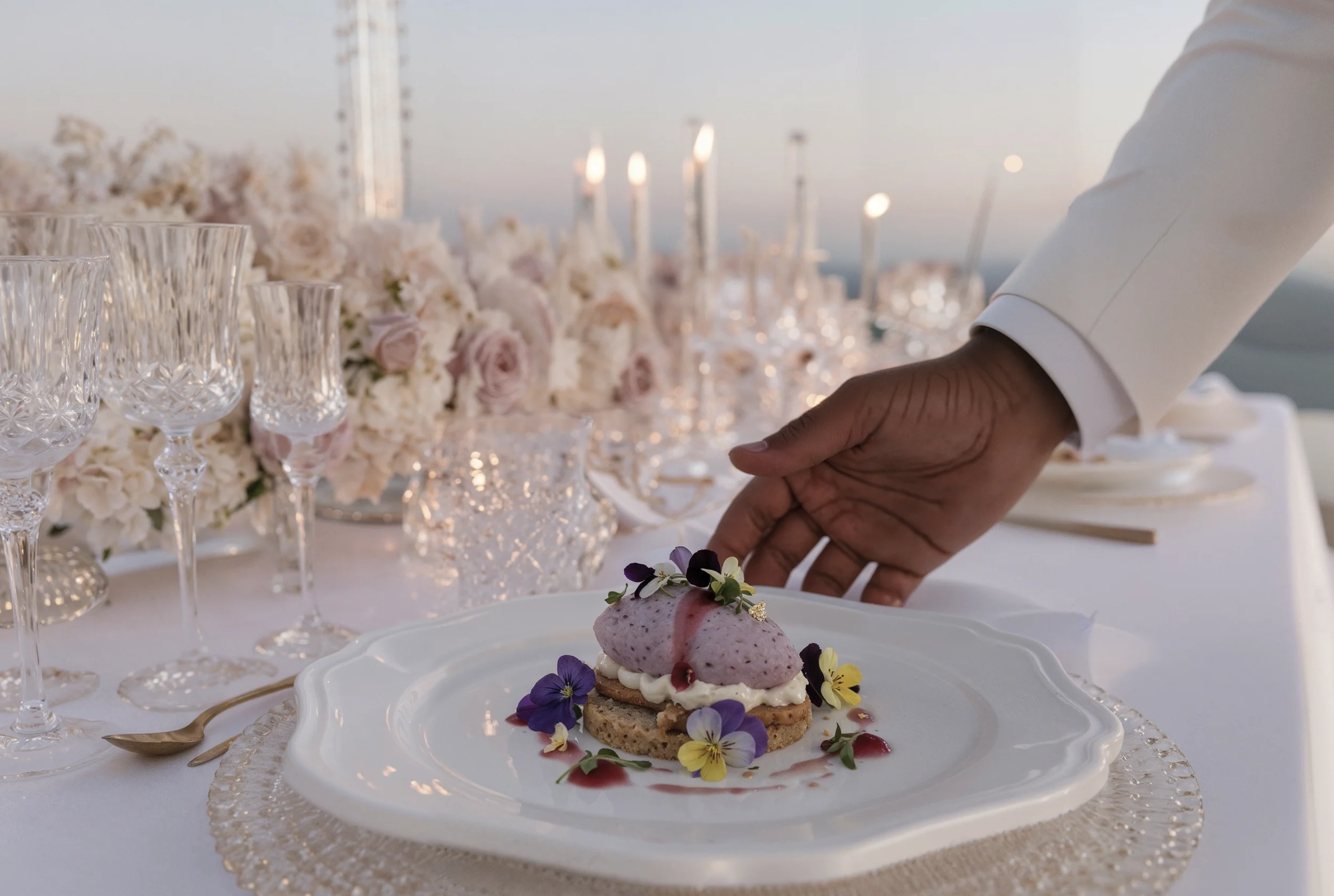
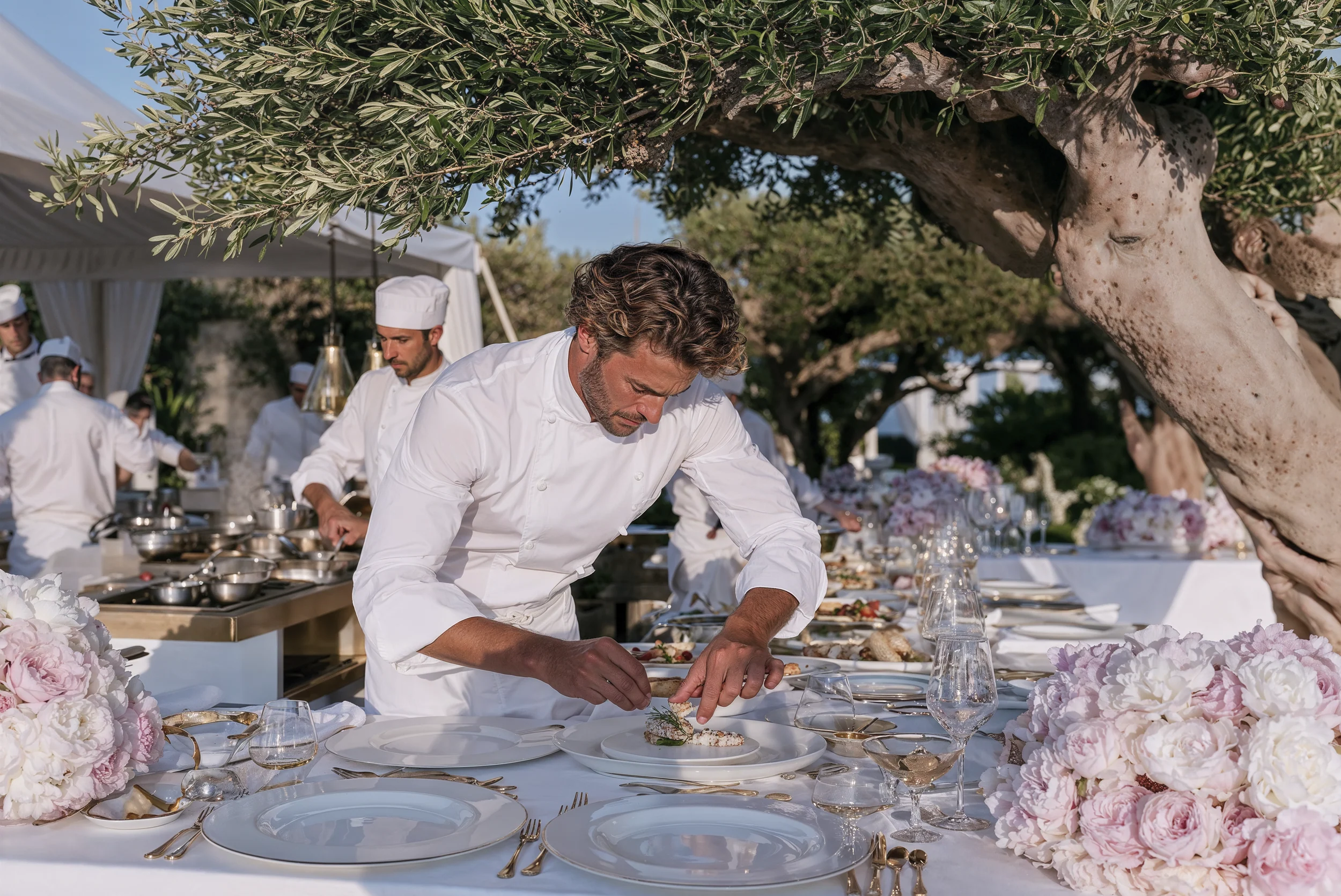
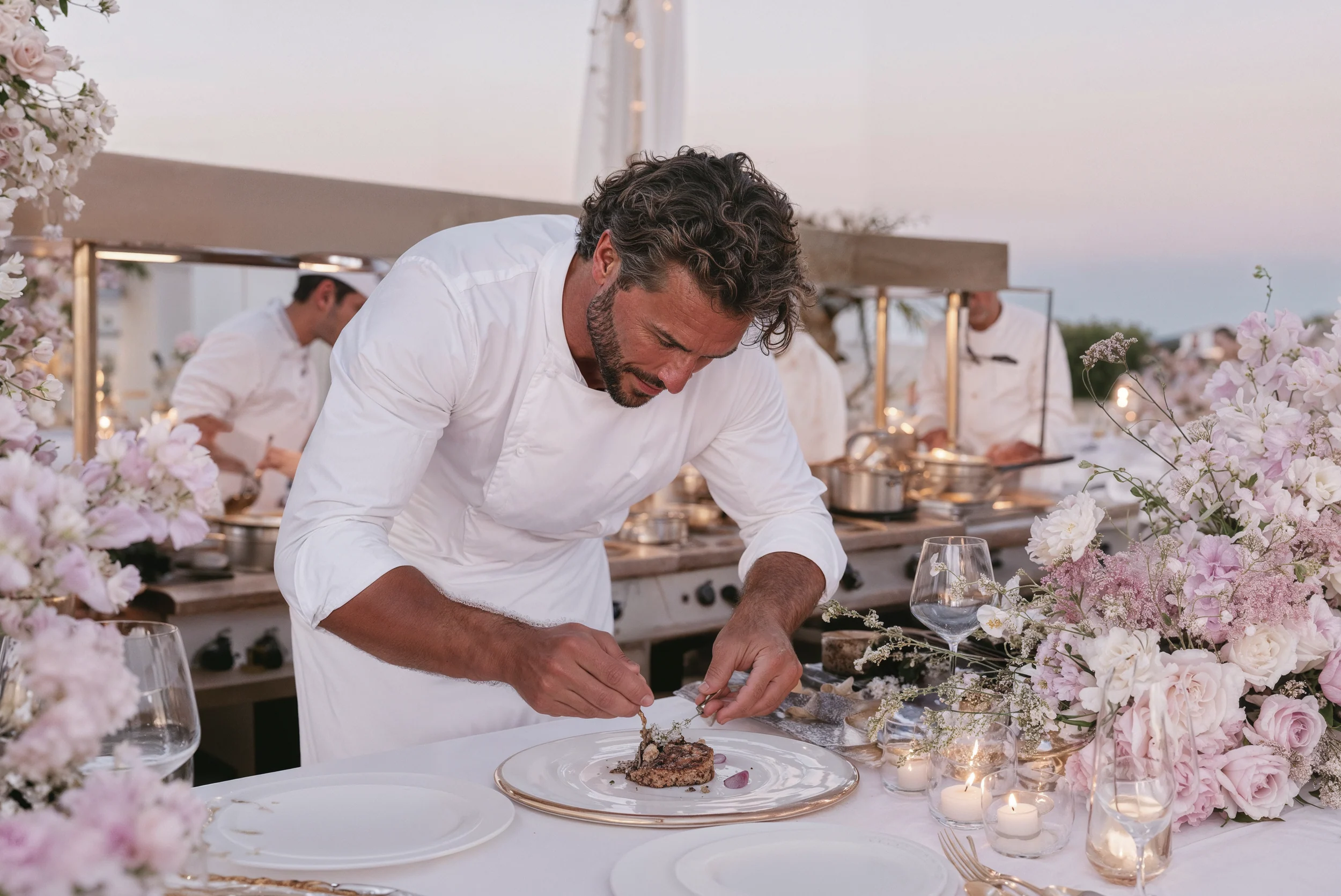
The chef and his brigade arrive early in the morning. Fresh produce is delivered, mise en place begins, and service is rehearsed with the front-of-house team. Come dinner time, each dish leaves the kitchen at the exact same moment for every table.
A seasonal menu on the Riviera
A great chef cooks the season first. On the Côte d'Azur, that means:
- In spring, asparagus, garden peas, broad beans, and milk-fed lamb.
- In summer, Mediterranean sea bass and red mullet, heirloom tomatoes, courgette blossoms, figs, apricots, and peaches.
- In autumn, porcini mushrooms, wild game, grapes, and the first truffles.
- All year round, olive oil from the hinterland’s mills, Menton lemon, morning-picked herbs of Provence.
A gourmet wedding dinner often features an amuse-bouche, a starter, a fish course, a meat course, a pre-dessert, dessert, followed by mignardises served with coffee. Some couples prefer a shorter, lighter menu to make way for dancing.
The ephemeral cuisine
Serving a gourmet dinner to a hundred or two hundred guests in a villa or an estate requires an invisible, yet immense organization:
- 01
The cuisine:
Set up beneath a tent or within an outbuilding, right by the tables, complete with stoves, ovens, work surfaces, and a dishwashing area.
Energy and water:
sufficient electrical power, often a generator, and running water.
The cold:
Cold storage rooms to preserve produce and desserts, particularly during the summer.
Traffic:
A short, discreet passageway between the kitchen and the tables, thoughtfully designed so that the service staff never crosses paths with the guests.
The Timeline:
Every course is served to the exact minute, in perfect harmony with the speeches and surprises of the evening.
It is a team effort between the chef, the partner caterer providing the equipment and staff, the venue, and us.
The Service
At this level, the service is half the dinner. A gastronomic menu requires a large, highly trained team—often one waiter for six to eight guests, a maître d' per zone, and sommeliers. Plates are served simultaneously to an entire table, glasses are refilled without being asked, and the rhythm follows that of the evening.
Food and wine pairing
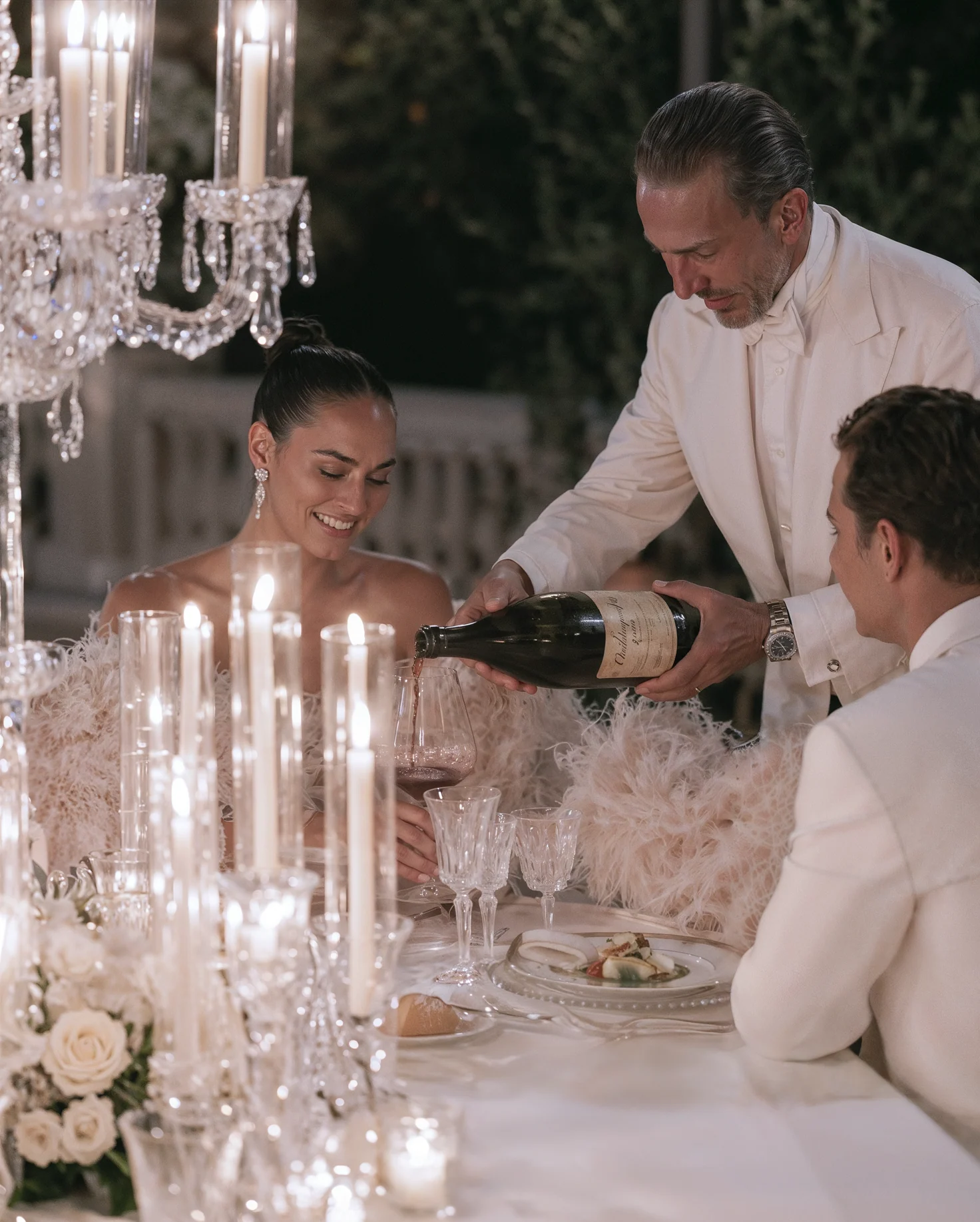
A grand dinner calls for fine wines. The sommelier works alongside the chef to curate a pairing for every dish: champagne to welcome guests, whites and rosés from Provence, a Bandol or a wine from Bellet, the Nice appellation, followed by Grands Crus from Burgundy or Bordeaux for the meat, and a sweet wine or champagne for dessert. A few ideas that couples love:
- A vintage from the year you met, or the year of your birth.
- Large formats, magnums and jeroboams, that make a striking statement at the table.
- A champagne cuvée with a personalized label.
- The tour of an estate with the guests, on the eve of the wedding.
Dietary requirements and traditions
A great chef knows how to craft a vegetarian menu as remarkable as the main menu, tailoring every dish to your guests' allergies. For a kosher or halal wedding, he collaborates with the relevant caterers and supervisors, honoring the rules of each tradition. All of this is prepared several weeks in advance, based on your guests' RSVPs.
Beyond the Dinner
- The welcome dinner, a more relaxed affair, set around a large table, a grill, or a seafood buffet.
- The cake, entrusted to a master pastry chef, or a French-style pièce montée.
- The midnight snack, served during the celebration, when dancing has worked up an appetite.
- The day-after brunch, conceived as an extension of the chef’s table.
- Guest favors: an olive oil, a honey, a creation by the pastry chef.
Frequently Asked Questions
- Can a Michelin-starred chef be brought to a private villa? Yes, provided the chef agrees and a suitable pop-up kitchen can be installed on site.
- How many guests can a Michelin-starred chef serve? It depends on the chef, their brigade, and the venue. Gastronomic dinners are particularly suited to intimate or medium-sized weddings. Beyond two hundred guests, a palace hotel or a high-end caterer, working alongside the chef, is often the best solution.
- How far in advance should a top chef be booked? Ideally a year in advance, as available dates are scarce, particularly in summer.
- Can we taste the menu before the wedding? Yes. The tasting takes place a few months prior, allowing each dish to be refined.
- Can the chef cater the entire weekend? Often, yes: welcome dinner, wedding dinner, and brunch, with seamless consistency from one meal to the next.
- How are special dietary requirements managed? They are compiled alongside guest RSVPs, then seamlessly integrated into the menu by the Chef, course by course.
The taste of memory
Guests sometimes forget the details of a wedding. They always remember a grand dinner: a flavor, a wine, a silence around the table at the moment of the first course. It is a memory that is retold, and still savored, years later. With all my elegance, Sandrine Arnould — Founder, Luxury Events Agency